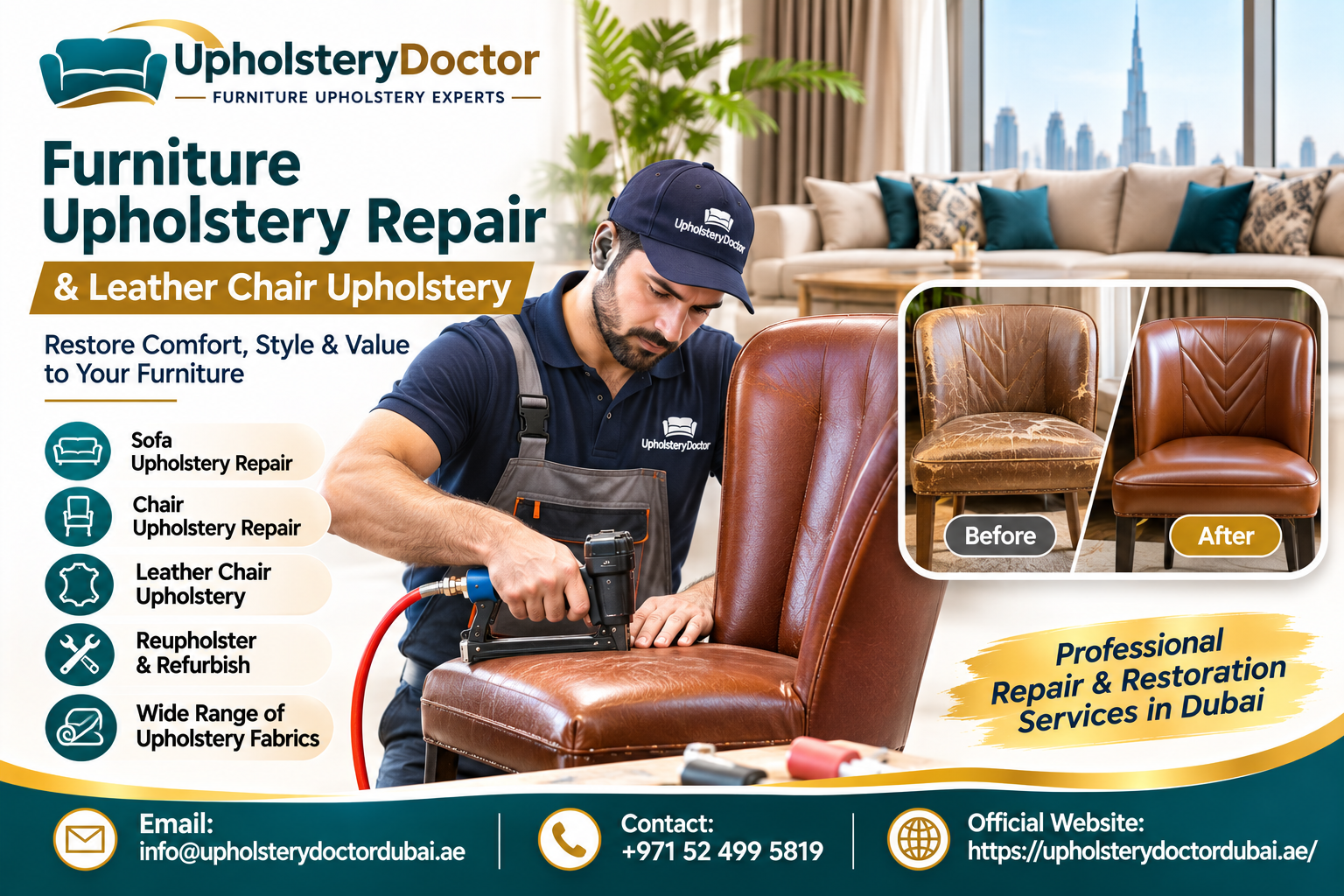
Leather chairs, executive seating, dining furniture, and upholstered lounge pieces contribute significantly to the character of these spaces.
However, frequent use, surface friction, sunlight, and unsuitable cleaning practices can affect furniture appearance and performance.
Professional Furniture Upholstery Repair provides an opportunity to restore suitable furniture through targeted repairs, material replacement, and improved seating comfort.
Meanwhile, Leather Chair Upholstery requires specialised attention because natural leather and synthetic alternatives respond differently to wear, cleaning products, and restoration techniques.
For homeowners, hotel operators, interior designers, and office managers, understanding these differences can help preserve valuable furniture while making informed maintenance decisions.
Why Leather Furniture Needs Specialised Attention
Leather furniture is valued for its appearance, texture, and distinctive surface characteristics.
However, leather can develop scratches, discolouration, dryness, surface cracking, and damaged stitching.
Some changes represent normal wear, while others indicate deterioration requiring professional attention.
Different leather finishes also require different maintenance procedures.
A cleaning product suitable for one leather type may damage another.
Proper material identification is therefore an important part of furniture assessment.
What Is Furniture Upholstery Repair?
Furniture Upholstery Repair involves restoring damaged or worn furniture coverings, cushions, stitching, and related upholstery components.
The scope may range from repairing a small seam to replacing the complete covering of a chair.
Depending on the furniture’s condition, restoration may also involve inspecting padding, support materials, and structural components.
However, not every damaged item requires complete reupholstery.
A suitable repair strategy considers the severity of the damage, furniture construction, material availability, and expected performance.
The objective is to restore useful furniture without undertaking unnecessary work.
Understanding Leather Chair Upholstery
Leather Chair Upholstery refers to the application, replacement, or restoration of leather coverings on seating furniture.
Common applications include executive chairs, lounge chairs, dining chairs, reception seating, and decorative furniture.
Leather upholstery may use different materials, including full-grain leather, corrected-grain leather, and various synthetic alternatives.
These materials differ in construction, appearance, maintenance requirements, and durability.
Before recommending a repair, professionals should establish the existing covering type.
This is essential because genuine leather and synthetic coverings may require substantially different restoration approaches.
Why Leather Identification Matters
Furniture owners sometimes describe every smooth, leather-like covering as genuine leather.
However, upholstered chairs may feature natural leather, coated leather, polyurethane-based materials, or other synthetic surfaces.
A repair technique intended for natural leather may be unsuitable for a synthetic covering.
Similarly, refinishing compounds and conditioning products should be compatible with the material.
Incorrect identification can lead to poor adhesion, staining, or further surface deterioration.
Professional assessment helps determine whether the covering can be repaired or whether replacement would be more appropriate.
Common Leather Chair Problems and Repair Options
| Furniture Problem | Possible Restoration Approach |
| Loose Stitching | Seam inspection and appropriate restitching |
| Surface Scratches | Material-compatible restoration where suitable |
| Faded Colour | Professional colour assessment and refinishing |
| Cracked Upholstery | Evaluation for repair or panel replacement |
| Worn Armrests | Targeted upholstery replacement |
| Flattened Cushions | Padding and support assessment |
| Peeling Synthetic Leather | Replacement of affected covering materials |
The appropriate treatment depends on the upholstery material and extent of deterioration.
Leather Restoration Versus Complete Reupholstery
One important decision is whether existing leather can be restored or must be replaced.
Minor surface wear may be suitable for professional refinishing, depending on the material.
Extensive cracking, weakened backing, or widespread coating failure may make replacement more practical.
Furniture with multiple damaged panels can also present colour-matching challenges.
A professional evaluation should consider expected results, material availability, and the furniture’s remaining useful life.
Maintaining Executive and Office Chairs
Executive chairs are frequently used in corporate offices, meeting rooms, and reception environments.
Repeated movement can create wear around armrests, seat edges, and backrest surfaces.
Upholstery deterioration may also affect the professional appearance of a workspace.
Selected repairs can help maintain suitable furniture without replacing an entire office seating collection.
However, mechanical problems involving chair bases, adjustment mechanisms, or other safety-critical components require separate inspection.
Replacing upholstery does not automatically resolve structural or mechanical defects.
Protecting Leather Furniture in Dubai’s Indoor Environment
Dubai interiors may expose furniture to strong sunlight near windows, dust, and frequent air-conditioning.
These conditions can influence leather appearance and maintenance requirements.
Prolonged direct sunlight may contribute to fading or material deterioration.
Homeowners should follow manufacturer-approved cleaning instructions and avoid harsh chemicals.
Suitable furniture positioning may help reduce unnecessary exposure.
Leather care products should be selected according to the actual upholstery finish.
Overconditioning or using incompatible treatments can cause problems rather than improve material performance.
Why Colour Matching Requires Professional Skill
Leather furniture often develops natural variations in colour and surface appearance through use.
Consequently, matching a repaired panel to surrounding upholstery can be challenging.
The colour observed in a photograph may also differ from the actual material under indoor lighting.
Professionals may need to examine physical samples and evaluate the existing finish.
For extensively worn furniture, complete reupholstery may provide a more consistent appearance than isolated replacement panels.
Homeowners should discuss realistic colour-matching expectations before approving restoration work.
Sustainable Value of Upholstery Restoration
Restoring suitable furniture can help extend its functional life and reduce unnecessary disposal.
Preserving a sound chair frame while replacing damaged upholstery may be a practical alternative to purchasing replacement furniture.
However, environmental benefits depend on the materials used, repair requirements, and expected durability.
Choosing appropriate covering materials is therefore important.
A restoration project delivers greater value when the finished furniture remains comfortable, structurally sound, and suitable for continued use.
Selecting Professional Leather Upholstery Services
Before approving furniture restoration, customers should evaluate several practical considerations:
- Material Expertise: Understanding of genuine and synthetic leather.
- Damage Assessment: Ability to identify surface and structural problems.
- Repair Options: Clear explanations of restoration and replacement methods.
- Colour Matching: Suitable material and finish selection.
- Workmanship: Attention to stitching, fitting, and upholstery tension.
- Quotation Transparency: Clear information about materials and included services.
A reliable repair proposal should explain the expected result and any limitations.
Frequently Asked Questions (FAQs)
1. What is Furniture Upholstery Repair?
It involves restoring worn or damaged furniture coverings, stitching, cushions, and related upholstery components to improve appearance and functionality.
2. What does Leather Chair Upholstery include?
It may involve replacing leather coverings, repairing seams, addressing suitable surface damage, and restoring upholstered seating components.
3. Can scratched leather chairs be repaired?
Some scratches can be treated using material-compatible restoration methods. The result depends on leather type, finish, and damage severity.
4. Can peeling synthetic leather be restored permanently?
Peeling synthetic coverings often require replacement because surface treatments may not provide durable results.
5. Is repairing a leather chair more affordable than replacing it?
It can be, particularly when the chair frame is sound. The decision depends on repair complexity, material costs, and furniture value.
Media Contact
Department: Leather Furniture Restoration and Upholstery Services
Enquiry Categories: Furniture Upholstery Repair, Leather Chair Upholstery, Office Chair Restoration, Leather Furniture Repair, and Custom Upholstery Solutions.
Contact: +971 52 499 5819
Email: info@upholsterydoctordubai.ae
Official Website: https://upholsterydoctordubai.ae/