
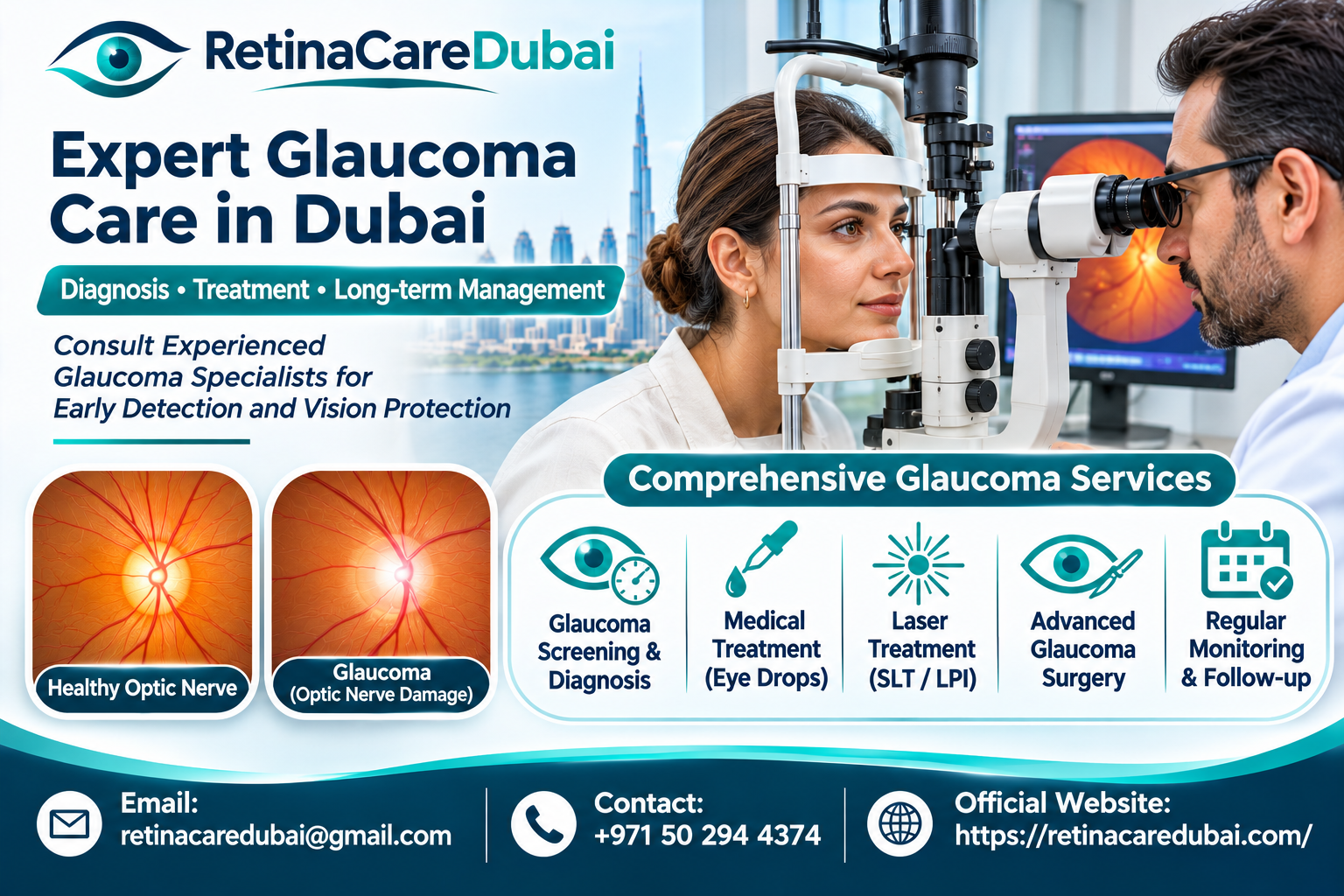
Glaucoma is a significant eye health concern because it can gradually damage the optic nerve and cause permanent vision loss. Unlike many eye conditions that produce noticeable symptoms, certain forms of glaucoma may progress without obvious warning signs.
For patients seeking glaucoma treatment specialists in dubai, understanding the importance of personalised monitoring, treatment effectiveness, and long-term vision preservation is essential.
Similarly, glaucoma specialists in dubai help patients navigate medical decisions involving eye pressure control, optic nerve examinations, and available treatment approaches.
An important aspect of glaucoma management is recognising that treatment does not end when medication is prescribed. Effective care involves understanding how the disease responds, identifying changes in visual function, and adjusting management when necessary.
Why Glaucoma Management Goes Beyond Eye Pressure
Glaucoma is a group of eye diseases characterised by progressive optic nerve damage.
Elevated intraocular pressure is an important risk factor, but glaucoma may also occur when pressure readings fall within the statistically normal range.
This means that measuring eye pressure alone cannot provide a complete picture of disease activity.
Ophthalmologists must also evaluate optic nerve appearance, retinal nerve tissue, and visual field performance.
A comprehensive assessment helps specialists determine whether the condition is stable or requires additional intervention.
What Do Glaucoma Treatment Specialists in Dubai Do?
Glaucoma treatment specialists in dubai are ophthalmologists with relevant expertise in diagnosing and managing glaucoma.
Their responsibilities may include identifying glaucoma type, evaluating disease severity, recommending medical or surgical treatment, and assessing changes in optic nerve function.
Some patients need prescription medication, while others may benefit from laser procedures or surgery.
The treatment decision depends on individual clinical findings.
Specialists also help patients understand the importance of monitoring, treatment adherence, and recognising symptoms that require urgent assessment.
Patients should independently verify professional licensing, qualifications, and experience before choosing an ophthalmologist.
Understanding Individualised Target Eye Pressure
An important concept in glaucoma treatment is the target intraocular pressure.
This refers to an estimated pressure level at which the risk of further optic nerve damage is considered acceptably reduced for a particular patient.
The target is not identical for everyone.
It may depend on existing nerve damage, measured eye pressure, disease progression, and other clinical factors.
A person with advanced glaucoma may require a different pressure goal from someone with early disease.
Target pressure is also not a permanent guarantee of stability.
Ophthalmologists may revise treatment goals when new clinical findings become available.
How Specialists Monitor Glaucoma Progression
Monitoring helps determine whether the selected treatment is adequately protecting the optic nerve.
Different examinations provide complementary information.
Optical Coherence Tomography (OCT) helps evaluate retinal nerve fibre structures and related anatomical changes.
Visual field testing assesses areas of visual sensitivity and can identify functional losses associated with glaucoma.
Tonometry measures intraocular pressure, while optic nerve examination supports the assessment of structural changes.
No individual investigation provides all the necessary information.
Specialists interpret results together and consider whether observed differences reflect genuine disease progression or testing variability.
Comparing Important Glaucoma Monitoring Methods
| Examination | Main Purpose | Clinical Importance |
| Tonometry | Measures eye pressure | Supports treatment evaluation |
| OCT Imaging | Assesses retinal nerve structures | Helps detect structural changes |
| Visual Field Testing | Evaluates visual sensitivity | Identifies functional vision loss |
| Gonioscopy | Examines the drainage angle | Helps classify glaucoma |
| Optic Nerve Examination | Evaluates nerve appearance | Supports diagnosis and monitoring |
| Corneal Thickness Measurement | Provides context for pressure readings | Assists clinical assessment |
These investigations should be selected according to individual medical requirements.
When Is Glaucoma Treatment Changed?
Glaucoma management may require adjustment when pressure remains above the individual treatment target or evidence suggests disease progression.
An ophthalmologist may review medication effectiveness, treatment adherence, adverse effects, and available alternatives.
Some patients benefit from changing prescribed eye drops or adding another pressure-lowering medication.
Others may require laser treatment or surgery.
The decision should consider the risks and benefits of each option.
Treatment escalation does not necessarily indicate that previous care was inappropriate. Glaucoma can change, and management must respond to the patient’s evolving condition.
Medical, Laser, and Surgical Treatment Options
Glaucoma specialists in dubai may recommend different treatments depending on glaucoma type and severity.
Prescription eye drops can help lower pressure by reducing fluid production or improving drainage.
Selective laser trabeculoplasty may be appropriate for certain patients with open-angle glaucoma.
Surgical options, including trabeculectomy, drainage implants, and selected minimally invasive procedures, may be considered when clinically suitable.
Each procedure has limitations and potential complications.
Although treatment can reduce the risk of additional damage, it generally cannot restore vision already lost through optic nerve injury.
Why Medication Adherence Matters
Glaucoma medications may be prescribed even when patients experience no noticeable symptoms.
This can make treatment adherence challenging.
Some individuals forget doses, experience difficulty administering drops, or develop irritation associated with medication.
These problems should be discussed with the treating ophthalmologist.
Stopping prescribed treatment without medical guidance can increase the risk of uncontrolled eye pressure.
A practical treatment plan should consider the patient’s ability to use medication correctly.
Clear instructions and appropriate support can improve consistency and reduce avoidable difficulties.
The Importance of Recognising Eye Emergencies
Most open-angle glaucoma develops gradually, but certain glaucoma-related conditions can cause sudden symptoms.
Acute angle-closure glaucoma may produce severe eye pain, headache, redness, blurred vision, halos around lights, nausea, or vomiting.
This is a medical emergency requiring immediate assessment.
Patients should not wait for an ordinary appointment when these symptoms occur.
Understanding the difference between gradual glaucoma progression and an acute eye emergency supports safer healthcare decisions.
Choosing Glaucoma Specialists in Dubai
Patients selecting an ophthalmologist should consider several practical factors:
- Relevant Expertise: Experience diagnosing and managing different glaucoma types.
- Diagnostic Capabilities: Access to appropriate optic nerve and visual function examinations.
- Treatment Options: Ability to explain suitable medical, laser, and surgical approaches.
- Clear Communication: Understandable explanations of clinical findings.
- Individualised Planning: Treatment recommendations based on personal risk and disease severity.
- Continuity of Care: Appropriate arrangements for further assessment and treatment review.
A suitable specialist should explain realistic outcomes without promising a complete cure.
Frequently Asked Questions (FAQs)
1. What do glaucoma treatment specialists in Dubai treat?
They diagnose and manage glaucoma, assess optic nerve damage, recommend pressure-lowering treatments, and monitor disease progression.
2. Can glaucoma worsen even when eye pressure is normal?
Yes. Some patients develop glaucoma or experience progression despite pressure readings within the usual statistical range.
3. What treatment options do glaucoma specialists in Dubai offer?
Depending on clinical needs, treatment may involve prescription eye drops, laser procedures, conventional surgery, or selected minimally invasive operations.
4. Can glaucoma treatment restore lost eyesight?
Glaucoma-related optic nerve damage is generally irreversible. Treatment aims to preserve remaining vision and reduce further deterioration.
5. How can patients help manage glaucoma effectively?
Patients should follow prescribed treatment, attend recommended examinations, report medication problems, and seek urgent assessment for sudden severe symptoms.
Media Contact
Department: Specialist Ophthalmology and Patient Care Enquiries
Enquiry Categories: Glaucoma Assessment, Optic Nerve Health, Eye Pressure Management, Glaucoma Treatment Options, and Vision Protection.
Contact: +971 50 294 4374
Email: retinacaredubai@gmail.com
Official Website: https://retinacaredubai.com/