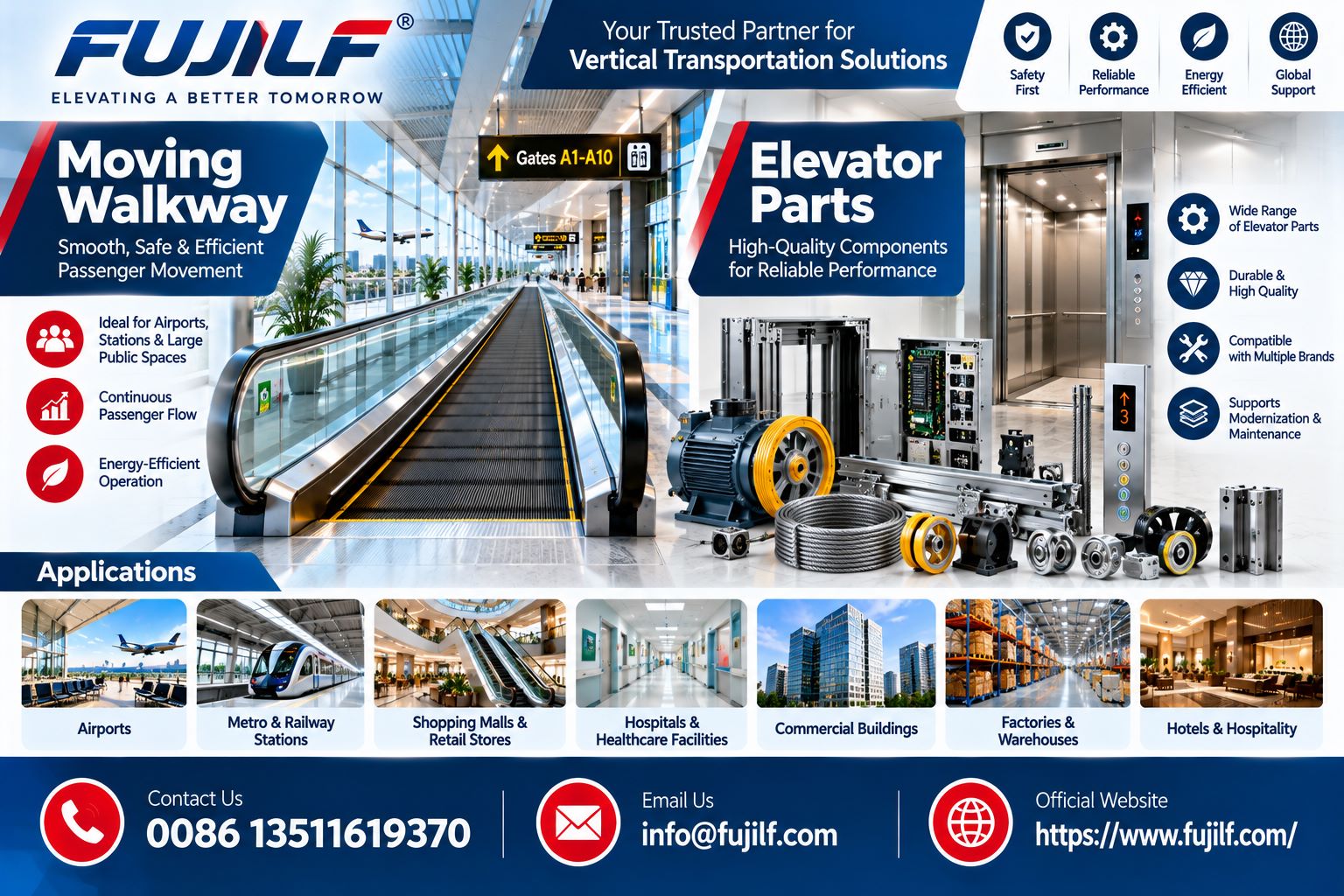
As airports, metro stations, shopping centres, hospitals, convention venues, office complexes, and large public buildings continue to prioritize efficient passenger movement, demand is growing for reliable moving walkway systems and high-quality elevator parts. Both play an important role in ensuring smooth traffic flow, dependable operation, and long-term performance across modern mobility infrastructure.
A moving walkway helps passengers cover long horizontal or gently inclined distances, while elevator components support the safe and efficient operation of vertical transportation systems. Although their functions are different, both require careful engineering, quality manufacturing, correct installation, and regular maintenance.
What Is a Moving Walkway?
A moving walkway is a continuously moving passenger transport system designed to carry people across horizontal or slightly inclined distances.
It is commonly installed in:
- airports
- metro and railway stations
- shopping centres
- hospitals
- exhibition centres
- large commercial buildings
- convention facilities
Moving walkways are especially useful in environments where passengers need to travel long distances without changing floors.
They can help improve comfort, reduce walking fatigue, and support smoother movement during peak traffic periods.
Why Moving Walkways Are Important
A well-designed moving walkway can improve passenger circulation in large public spaces.
Key benefits include:
Continuous Passenger Flow
Unlike elevators, moving walkways operate continuously and do not require waiting for a cabin.
Reduced Walking Effort
They can help passengers carrying luggage, shopping bags, or other items move more comfortably.
Improved Accessibility
When integrated into a building’s transportation strategy, moving walkways can make long corridors easier to navigate.
Better Space Management
They can guide pedestrian traffic through predetermined routes and reduce congestion in busy areas.
Horizontal vs Inclined Moving Walkways
Moving walkways may be designed in different configurations.
Horizontal Moving Walkway
Typically used in airports, stations, and large corridors where long horizontal distances are involved.
Inclined Moving Walkway
Often used in commercial environments where passengers may need to move between nearby levels while carrying shopping carts or luggage.
The correct design depends on the building layout, traffic volume, inclination, and intended user profile.
Safety Features in Modern Moving Walkways
Passenger safety is a major consideration in walkway design.
Modern systems may include features such as:
- emergency stop controls
- handrail monitoring
- comb plate protection
- step or pallet monitoring
- overload protection
- speed monitoring
- automatic braking
Routine inspection and preventive maintenance are essential because the system contains many moving components operating for extended periods.
Energy Efficiency and Smart Operation
Modern mobility systems are increasingly designed with energy efficiency in mind.
A moving walkway may use:
- variable-speed operation
- standby modes
- efficient motors
- motion sensors
- LED lighting
- intelligent control systems
These features can reduce unnecessary energy consumption during low-traffic periods while maintaining readiness when passengers approach.
What Are Elevator Parts?
Elevator parts are the mechanical, electrical, structural, and control components that work together to operate an elevator system.
They may include:
- traction machines
- motors
- controllers
- guide rails
- doors
- door operators
- ropes
- sheaves
- cabins
- buttons
- sensors
- safety devices
Each part has a specific role, and component quality can directly affect reliability and operating performance.
Why Elevator Parts Quality Matters
Elevators operate repeatedly throughout the day, often under heavy passenger or goods loads.
Poor-quality elevator parts can contribute to:
- unexpected breakdowns
- noise
- vibration
- inaccurate stopping
- door problems
- increased maintenance costs
Using properly matched components helps improve reliability and reduces compatibility issues during repairs or modernization.
Elevator Controllers
The controller acts as the operational brain of an elevator.
It manages:
- floor selection
- motor operation
- door timing
- speed
- safety inputs
- traffic logic
Modern controllers may also support energy-saving functions, diagnostics, and building management integration.
Reliable control equipment is essential for consistent elevator operation.
Elevator Door Systems
Doors are among the most frequently used elevator components.
Door systems typically include:
- panels
- operators
- sensors
- tracks
- rollers
- locking mechanisms
Because doors open and close repeatedly, wear can occur over time.
High-quality elevator parts in the door system help maintain smooth movement and safe passenger access.
Guide Rails and Suspension Components
Guide rails help keep the elevator car and counterweight aligned during travel.
Suspension systems may include ropes, belts, or other engineered components depending on elevator design.
These parts should be correctly installed and maintained to support:
- smooth travel
- alignment
- ride comfort
- safe operation
Regular inspection is important because wear can affect performance.
Motors and Traction Machines
The motor and traction machine provide the power required to move the elevator car.
Modern systems increasingly use efficient drive technologies to reduce energy consumption and improve ride quality.
Important characteristics may include:
- power rating
- torque
- efficiency
- noise level
- compatibility with the controller
Replacement components should match system specifications carefully.
Maintenance Keeps Systems Reliable
Both moving walkways and elevators require regular servicing.
For a moving walkway, maintenance may include inspection of:
- pallets or belts
- handrails
- drive systems
- comb plates
- motors
- sensors
- brakes
For elevators, maintenance may include:
- doors
- ropes
- guide rails
- traction systems
- controllers
- safety devices
- electrical connections
Preventive maintenance can help identify wear before it causes a breakdown.
Modernization Extends Equipment Life
Older systems can often be upgraded rather than fully replaced.
Modernization may involve replacing selected elevator parts, such as:
- controllers
- motors
- door operators
- control panels
- safety sensors
- drive systems
Moving walkways can also be modernized with new controls, drives, handrails, and safety components.
Modernization can improve efficiency, reliability, and user experience.
Choosing the Right Moving Walkway Supplier
A professional moving walkway supplier should evaluate:
- travel distance
- passenger volume
- inclination
- installation environment
- operating hours
- safety requirements
- energy efficiency
- maintenance access
The correct system should be selected according to actual traffic patterns rather than appearance alone.
Choosing the Right Elevator Parts Supplier
Buyers should consider several factors when sourcing elevator parts:
- component compatibility
- manufacturing quality
- dimensional accuracy
- safety requirements
- spare-part availability
- technical documentation
- delivery reliability
- after-sales support
Using incompatible components can create installation problems or affect system performance.
Applications Across Different Buildings
Airports
Moving walkways help passengers move between gates, while elevators support vertical access between terminal levels.
Shopping Centres
Walkways and elevators support passenger movement across large commercial spaces.
Hospitals
Reliable mobility systems help patients, staff, visitors, and equipment move efficiently.
Public Transport Facilities
Moving walkways and elevators improve passenger flow and accessibility in large stations.
Commercial Buildings
Elevators and related parts support daily traffic across multiple floors.
Frequently Asked Questions
What is a moving walkway?
A moving walkway is a continuous passenger transport system designed to move people across horizontal or gently inclined distances.
Where are moving walkways commonly installed?
They are widely used in airports, railway stations, shopping malls, hospitals, and large public buildings.
Are moving walkways energy efficient?
Modern systems can include standby operation, variable speed, efficient motors, and smart controls to reduce unnecessary energy consumption.
What are elevator parts?
Elevator parts are the mechanical, electrical, and safety components that make up an elevator system.
What are common elevator parts?
Common components include motors, controllers, guide rails, doors, ropes, sensors, buttons, and safety systems.
Why is component compatibility important?
Correct compatibility helps ensure proper installation, reliable operation, and safe system performance.
Can elevator parts be replaced individually?
Yes. Many components can be replaced or upgraded during maintenance or modernization.
How often should moving walkways be maintained?
Maintenance frequency depends on operating hours, traffic volume, environment, and manufacturer recommendations.
Can old elevators be modernized?
Yes. Controllers, motors, doors, drives, and safety components can often be upgraded.
What information is needed when requesting a quotation?
Useful details include equipment model, application, dimensions, travel distance, operating environment, required component type, and quantity.
Media Contact
Vertical Transportation & Parts Enquiries
Contact: 0086 13511619370
Email: info@fujilf.com
Official Website: https://www.fujilf.com/