In specialised industries such as semiconductor equipment manufacturing, vacuum deposition, and materials research, even small variations in ceramic components can influence equipment performance and operating costs.
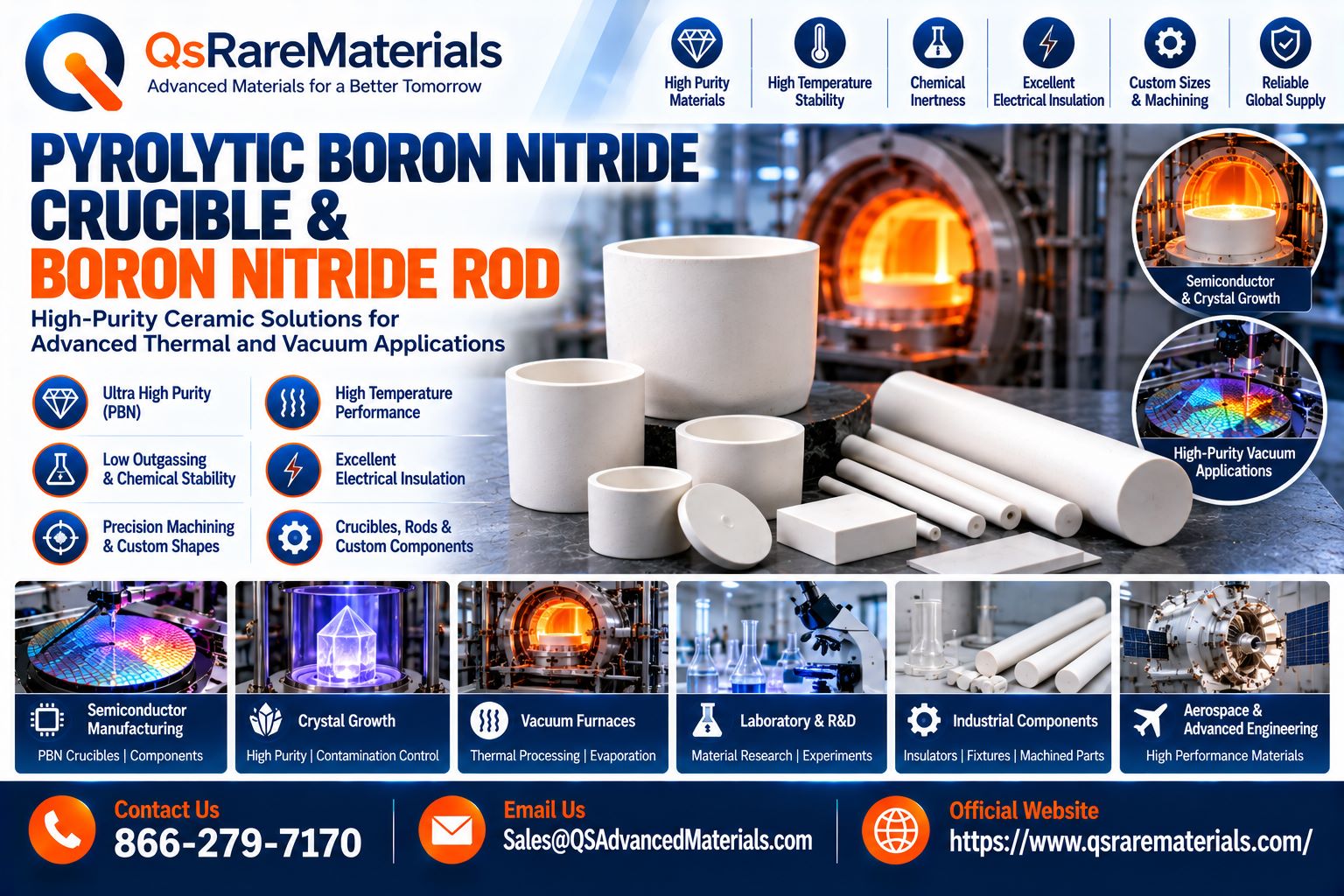
A Pyrolytic Boron Nitride Crucible offers a specialised solution for selected high-purity processing applications where material compatibility and controlled operating conditions are essential.
Meanwhile, a Boron Nitride Rod provides a versatile ceramic form for manufacturing precision insulators, spacers, fixtures, and other engineered components.
The growing engineering focus is not simply on choosing materials with impressive specifications. Manufacturers must also consider component qualification, dimensional consistency, installation procedures, and replacement planning.
Understanding these factors helps industrial buyers select ceramic products that support repeatable production.
Why Component Reliability Matters in Advanced Manufacturing
High-performance manufacturing equipment often operates under carefully controlled conditions.
A component failure can interrupt processing, increase maintenance requirements, or affect valuable materials.
Ceramic components should therefore be evaluated for their performance within the complete manufacturing system.
Engineers must consider temperature changes, mechanical support, material contact, and operating atmosphere.
This approach encourages manufacturers to establish clear component specifications before purchasing replacement parts or developing new equipment.
What Is a Pyrolytic Boron Nitride Crucible?
A Pyrolytic Boron Nitride Crucible is a specialised ceramic container typically manufactured through chemical vapour deposition.
This manufacturing process can produce high-purity boron nitride structures without the conventional binders used in certain pressed ceramic grades.
PBN crucibles are considered for selected evaporation, vacuum processing, and materials research applications.
Their layered structure provides distinctive thermal and electrical properties.
However, performance depends on the processed material, operating temperature, atmosphere, and component geometry.
A crucible suitable for one deposition process may not be appropriate for another.
Technical compatibility should be verified before use.
How Boron Nitride Rod Supports Equipment Design
A Boron Nitride Rod is a cylindrical ceramic product that may be used as stock for manufacturing customised technical components.
Certain machinable hexagonal boron nitride grades are suitable for producing insulating sleeves, positioning elements, spacers, and specialised fixtures.
Its electrical insulation and thermal properties can make it useful in appropriately designed equipment.
However, machinable boron nitride rods are not necessarily made from the same grade or by the same process as pyrolytic boron nitride crucibles.
Their mechanical strength, porosity, and temperature performance may differ.
Engineers should specify the required grade rather than treating all boron nitride materials as interchangeable.
Why Process Qualification Is Essential
Introducing a new ceramic component into established equipment requires careful evaluation.
Even when replacement components have similar dimensions, differences in material grade or surface condition may affect performance.
A qualification process may include dimensional inspection, compatibility checks, and representative operating trials.
Manufacturers should establish acceptance criteria before approving a component for repeated use.
For critical applications, documentation should identify the approved material, manufacturing specifications, and relevant inspection results.
This principle can help reduce avoidable process disruptions.
Understanding the Difference Between Crucibles and Rods
| Evaluation Factor | Pyrolytic Boron Nitride Crucible | Boron Nitride Rod |
| Main Function | Contains suitable materials during processing | Serves as stock or a component |
| Typical Manufacturing | Chemical vapour deposition | Depends on selected ceramic grade |
| Common Applications | Evaporation and specialised processing | Insulators, spacers and fixtures |
| Important Properties | Purity, geometry and chemical compatibility | Machinability, dimensions and insulation |
| Design Considerations | Wall thickness and thermal conditions | Loading, orientation and tolerances |
| Main Selection Priority | Process suitability | Component function and material grade |
Both forms require application-specific technical evaluation.
Thermal Cycling and Material Compatibility
Many manufacturing systems experience repeated heating and cooling.
These temperature changes can create mechanical stresses through thermal expansion and differences between adjacent materials.
PBN has direction-dependent properties, making component orientation and geometry relevant to engineering design.
Boron nitride rods may also require suitable mechanical support to avoid cracking or excessive loading.
Atmosphere matters as well.
Oxidising conditions can restrict the useful operating temperature of boron nitride materials compared with suitable inert or vacuum environments.
Manufacturers should evaluate actual operating conditions rather than relying on a single maximum temperature figure.
Precision Dimensions and Assembly Performance
Dimensional accuracy becomes particularly important when ceramic parts must fit inside specialised equipment.
A crucible may require defined wall thickness, diameter, and overall geometry to suit its holder.
A machined rod component may need precise holes, grooves, or contact surfaces.
Incorrect dimensions can affect installation or create unwanted mechanical stress.
Ceramic materials also require appropriate handling because brittle components may fracture under unsuitable loading.
Clear engineering drawings, tolerances, and inspection procedures help suppliers manufacture parts according to the intended application.
Maintenance and Replacement Planning
Component reliability involves more than initial material selection.
During operation, ceramic components may experience deposits, surface changes, or other forms of wear.
Maintenance procedures should reflect material characteristics and equipment requirements.
Aggressive cleaning methods can damage some ceramic surfaces.
Businesses should follow appropriate handling instructions and avoid assuming that a used crucible can always be restored to its original condition.
Replacement planning is also important for specialised components with limited availability.
Maintaining approved specifications can make sourcing replacement parts more predictable.
Quality Assurance for Industrial Buyers
A practical purchasing process should address material characteristics and manufacturing consistency.
Important considerations include:
- Material Grade: Confirm composition, purity, and production method.
- Dimensional Requirements: Review drawings, tolerances, and surface specifications.
- Operating Environment: Assess temperature, atmosphere, and chemical exposure.
- Quality Documentation: Request relevant inspection records when necessary.
- Prototype Evaluation: Test representative components before routine production.
- Supply Planning: Discuss repeat orders, specifications, and replacement requirements.
These steps help businesses evaluate ceramic products systematically.
Frequently Asked Questions (FAQs)
1. What is a Pyrolytic Boron Nitride Crucible used for?
It is used in selected high-purity applications, including compatible evaporation processes, vacuum systems, and specialised materials research.
2. What is a Boron Nitride Rod?
A boron nitride rod is a cylindrical ceramic material that can be used directly or processed into suitable insulating and precision components.
3. Is PBN the same as machinable boron nitride?
No. PBN is commonly produced through chemical vapour deposition, while many machinable boron nitride grades use different manufacturing methods and may contain additives.
4. Can boron nitride ceramics withstand repeated heating?
Certain grades offer useful thermal performance, but suitability depends on temperature changes, operating atmosphere, geometry, and mechanical conditions.
5. How should buyers choose boron nitride components?
Buyers should confirm material grade, application compatibility, dimensional accuracy, quality documentation, and representative performance testing.
Media Contact
Department: High-Performance Ceramic Materials and Industrial Component Enquiries
Contact: 866-279-7170
Email: Sales@QSAdvancedMaterials.com
Official Website: https://www.qsrarematerials.com/