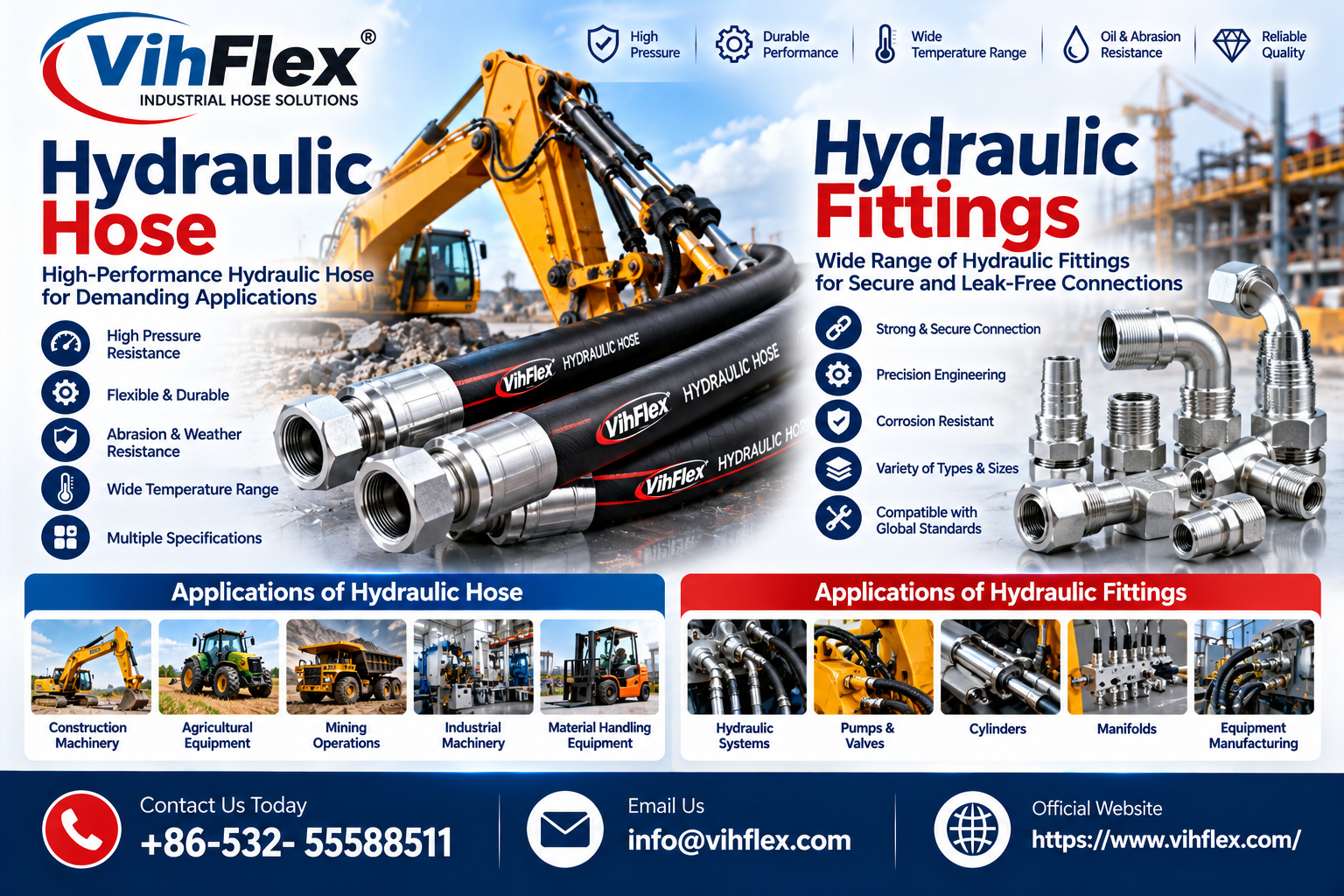
Modern industrial machinery depends on hydraulic systems to deliver controlled force, movement, and reliable equipment performance. From construction machinery and agricultural equipment to manufacturing plants and material-handling systems, hydraulic components play an essential role in demanding operations.
A Hydraulic Hose transports pressurized hydraulic fluid between compatible system components while accommodating movement, vibration, and equipment positioning.
Meanwhile, Hydraulic Fittings connect hoses with pumps, valves, cylinders, and other hydraulic equipment, helping maintain secure, leak-resistant fluid connections.
Understanding their construction, technical specifications, applications, and maintenance requirements can help businesses improve equipment reliability and reduce operational risks.
What Is a Hydraulic Hose?
A Hydraulic Hose is a flexible reinforced tube designed to transport hydraulic fluid under specified operating pressures and temperatures.
Unlike ordinary rubber tubing, hydraulic hoses incorporate specialized materials and reinforcement layers engineered for demanding fluid-power applications.
A typical hydraulic hose contains three primary components:
- Inner Tube: Carries hydraulic fluid and provides fluid compatibility.
- Reinforcement Layer: Uses suitable textile or steel reinforcement to support pressure requirements.
- Outer Cover: Protects internal layers against abrasion, weather, and environmental exposure.
The complete hose assembly must be suitable for the intended equipment and application.
Why Hydraulic Hoses Are Important in Industrial Machinery
Hydraulic systems transfer power through pressurized fluids, allowing machinery to generate significant force and precise movement.
A correctly specified hose supports this process while accommodating vibration and movement.
Pressure Resistance
Suitable reinforcement allows the hose to operate within its manufacturer’s rated working pressure.
Flexibility
Flexible hoses help connect components that move relative to one another.
Fluid Compatibility
The hose’s inner tube must be compatible with the hydraulic fluid being transported.
Temperature Performance
Hose materials should accommodate expected fluid and environmental temperatures.
Environmental Protection
Appropriate outer covers help protect against abrasion, oil exposure, and weathering.
Actual performance depends on hose construction, installation, operating conditions, and maintenance.
Understanding Hydraulic Fittings
Hydraulic Fittings are mechanical connectors used to join hydraulic hoses, pipes, tubes, and equipment ports.
Their primary function is to create connections appropriate for the fluid, pressure, and operating environment.
Common fitting categories include:
Straight Fittings: Connect components along a direct fluid path.
Elbow Fittings: Allow hose connections where directional changes are necessary.
Adapters: Connect compatible hydraulic connection types.
Crimp Fittings: Attach to designated hoses using an approved crimping process.
Quick-Disconnect Couplings: Enable connections and disconnections within specifically designed hydraulic systems.
Connection standards, thread forms, and sealing arrangements vary. Similar-looking fittings should never be assumed interchangeable.
Hydraulic Hose and Hydraulic Fittings: Key Differences
| Feature | Hydraulic Hose | Hydraulic Fittings |
| Primary function | Transport pressurized fluid | Connect hydraulic components |
| Construction | Flexible tube with reinforcement | Engineered metal or other suitable components |
| Main concern | Pressure, temperature, bending | Sealing, connection compatibility |
| Applications | Mobile and industrial machinery | Hydraulic system connections |
| Selection criteria | Diameter, pressure, fluid compatibility | Thread, seal type, pressure rating |
Both components must work together as a properly specified assembly.
Major Industrial Applications
Hydraulic equipment operates across several demanding industries.
Construction Equipment
Excavators, loaders, lifting machinery, and other equipment use hydraulic systems for controlled movement.
Agricultural Machinery
Tractors and agricultural attachments use hydraulic connections for various powered functions.
Manufacturing Plants
Industrial presses, production machinery, and automation systems depend on suitable hydraulic components.
Mining Equipment
Heavy-duty machinery requires appropriately rated assemblies for demanding operating conditions.
Material Handling
Forklifts and lifting equipment use hydraulic systems to operate selected mechanical functions.
Each application requires components selected for its specific pressure, temperature, movement, and environmental conditions.
How to Select the Right Hydraulic Hose
Selecting a suitable Hydraulic Hose requires technical evaluation.
Important factors include:
- Working Pressure: Include expected pressure surges and system requirements.
- Internal Diameter: Choose dimensions appropriate for fluid flow and velocity.
- Temperature Range: Consider fluid and ambient temperatures.
- Fluid Compatibility: Confirm suitability for the intended hydraulic fluid.
- Minimum Bend Radius: Avoid installations that exceed the manufacturer’s bending limits.
- Hose Length: Allow for movement without excessive tension.
- Environmental Exposure: Consider abrasion, chemicals, sunlight, and heat.
- Assembly Compatibility: Match fittings and hose specifications.
The rated working pressure of an assembly must not exceed the rating of its lowest-rated component.
Important Factors When Choosing Hydraulic Fittings
Proper fitting selection is equally important.
Buyers should verify:
- Thread type and dimensions.
- Sealing method and geometry.
- Working-pressure rating.
- Hose and fitting compatibility.
- Material and corrosion-resistance requirements.
- Applicable assembly and crimp specifications.
Using incompatible fittings can cause leakage, separation, or sudden failure.
Manufacturers’ instructions should be followed for all hydraulic hose assembly procedures.
Common Causes of Hydraulic Hose Failure
Hydraulic hose failures can interrupt production and create serious safety hazards.
Common causes include excessive bending, abrasion, pressure overload, improper routing, incompatible fluids, damaged fittings, and incorrect assembly.
Twisting during installation can also shorten hose service life.
Regular inspections and appropriate protective routing can help identify problems before significant damage occurs.
Hydraulic fluid escaping under pressure can penetrate skin and cause severe injuries. Operators must never use their hands to locate suspected leaks.
Suspected fluid-injection injuries require immediate emergency medical attention.
Hydraulic Hose Manufacturing and Quality Control
Manufacturing processes vary according to hose type and application.
Production may include inner tube extrusion, reinforcement application, outer cover manufacturing, curing, and inspection.
Quality evaluations can include dimensional checks, pressure testing, material verification, and visual inspection.
For Hydraulic Fittings, manufacturing may involve precision machining, surface treatment, dimensional inspection, and appropriate performance testing.
Technical documentation should identify relevant ratings and compatible assembly requirements.
Maintenance Tips for Hydraulic Systems
Routine maintenance supports reliable operation.
Important practices include:
- Inspecting hoses for cracks, abrasion, leaks, and bulges.
- Checking fittings for visible damage and connection problems.
- Maintaining suitable fluid cleanliness.
- Preventing unnecessary hose twisting and tension.
- Following approved depressurization procedures.
- Replacing damaged assemblies according to manufacturer guidance.
Never tighten or disconnect pressurized hydraulic connections.
Frequently Asked Questions (FAQs)
1. What is a Hydraulic Hose?
A hydraulic hose is a reinforced flexible tube designed to transport hydraulic fluid under specified pressure and temperature conditions.
2. What are Hydraulic Fittings?
Hydraulic fittings are connectors used to join hoses, pipes, tubes, and components within hydraulic systems.
3. Which materials are used in hydraulic hoses?
Common materials include synthetic rubber, thermoplastics, textile reinforcement, and steel reinforcement.
4. Where are hydraulic hoses commonly used?
They are used in construction, agriculture, manufacturing, mining, and material-handling equipment.
5. Can hydraulic fittings be reused?
Reuse depends on fitting design and manufacturer instructions. Many crimped fittings are not intended for reuse.
6. How do I choose the correct hose pressure rating?
Select an assembly rated for the system’s maximum operating conditions, including relevant pressure surges.
7. What causes hydraulic hose leakage?
Common causes include damaged hose material, incorrect fittings, worn connections, and improper installation.
8. Are all hydraulic fittings interchangeable?
No. Thread types, sealing systems, dimensions, and pressure ratings must match.
9. How often should hydraulic hoses be inspected?
Inspection frequency depends on operating conditions, equipment usage, manufacturer instructions, and applicable workplace requirements.
10. How can businesses choose a reliable hydraulic hose supplier?
Compare technical specifications, manufacturing capabilities, product compatibility, testing documentation, customization options, and commercial terms.
Media Contact
Industry: Industrial Hose Manufacturing, Hydraulic Systems & Fluid Power Components
Service Enquiries: Hydraulic Hoses, Hydraulic Fittings, Industrial Rubber Hoses, Hose Assemblies & Customized Fluid-Handling Solutions
Email: info@vihflex.com
Contact Number: +86 532 5558 8592
Official Website: https://www.vihflex.com/