As plastic processors seek consistent product quality, efficient material handling, and reliable machinery performance, extrusion equipment components remain central to manufacturing operations.
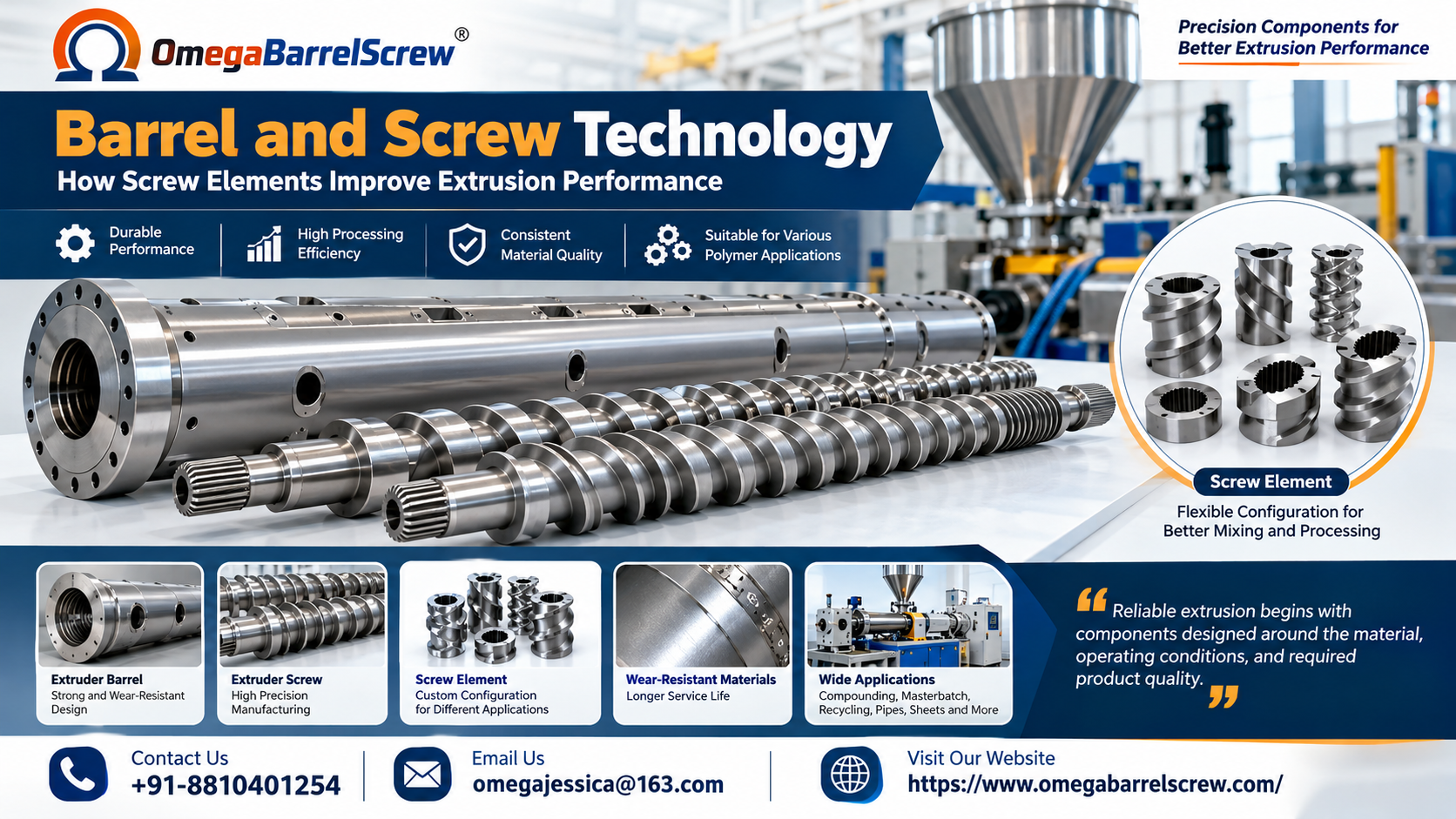
The barrel and screw assembly is one of the most important parts of an extrusion system. It controls how polymer materials are conveyed, melted, mixed, and prepared for downstream production.
Meanwhile, the screw element plays a specialized role in modular twin-screw extrusion systems, where different component configurations influence mixing intensity, material movement, and processing conditions.
Understanding these technologies can help manufacturers improve maintenance planning, select suitable replacement components, and maintain consistent extrusion performance.
What Is a Barrel and Screw Assembly?
A barrel and screw assembly is a mechanical processing system commonly used in plastic extruders and related polymer-processing equipment.
The screw rotates inside a precisely manufactured barrel, conveying material through controlled processing zones.
The barrel provides structural containment and supports temperature management, while the screw influences material movement, melting, mixing, and pressure development.
Important applications include:
- Plastic compounding and pellet production.
- Polymer blending.
- Masterbatch manufacturing.
- Plastic pipe and profile extrusion.
- Engineering plastic processing.
- Polymer recycling.
- Selected injection molding operations.
Understanding the Role of a Screw Element
A screw element is an individual component used in certain modular extrusion screw assemblies, particularly co-rotating twin-screw extruders.
Instead of using one continuous screw profile, modular systems incorporate different elements along a shaft.
These elements can be selected and arranged according to specific processing requirements.
Conveying Elements
Conveying elements primarily move material through the barrel.
Kneading Elements
Kneading blocks provide mixing action and can influence the mechanical energy applied to a polymer formulation.
Mixing Elements
Specialized mixing components help distribute additives, fillers, and other ingredients throughout the material.
Reverse Elements
Reverse-pitch elements can increase resistance to forward flow and influence material filling and residence time.
The selection and arrangement of elements affect overall machine performance.
How Barrel and Screw Components Work Together
During extrusion, polymer materials enter the processing equipment through a feeding system.
As the screw rotates, its geometry moves the material through designated zones.
Controlled barrel heating and mechanical energy contribute to melting and processing.
The material then travels toward the die or subsequent processing stage.
Several parameters influence this operation:
Screw Geometry: Determines conveying and mixing characteristics.
Barrel Temperature: Influences thermal conditions during processing.
Screw Speed: Affects material movement and mechanical energy input.
Component Clearance: Influences processing efficiency and wear.
Material Properties: Determine suitable operating conditions.
An unsuitable combination may produce inconsistent output, excessive material degradation, or premature component wear.
Different Types of Barrel and Screw Systems
Manufacturers use different screw configurations depending on equipment requirements.
| Component Type | Main Characteristics | Common Application |
| Single-screw assembly | One rotating screw | Pipes, sheets, films |
| Twin-screw assembly | Two coordinated screws | Compounding and blending |
| Segmented screw elements | Modular processing components | Specialized twin-screw extrusion |
| Bimetallic barrel | Wear-resistant internal material layer | Abrasive processing conditions |
| Nitrided screw and barrel | Surface-hardened components | Suitable general polymer processing |
The correct configuration depends on equipment specifications, materials, and production objectives.
Why Screw Element Design Matters
The design of each screw element influences how materials travel and interact inside an extruder.
For example, a formulation containing pigments or mineral fillers may require a configuration that promotes appropriate ingredient distribution.
Heat-sensitive polymers may require a gentler processing arrangement to limit unnecessary mechanical energy and residence time.
Important design considerations include element pitch, geometry, length, orientation, and compatibility with adjacent components.
Practical material trials can help verify whether a proposed configuration meets production requirements.
Materials Used in Extruder Screws and Barrels
Extrusion components operate under demanding mechanical and thermal conditions.
Material selection is therefore important for durability and manufacturing reliability.
Common engineering approaches include nitrided alloy steels, tool steels, and suitable wear-resistant or corrosion-resistant materials.
Bimetallic barrel constructions may incorporate specialized internal layers for selected operating conditions.
Material selection depends on:
- Polymer formulation.
- Filler concentration.
- Operating temperature.
- Abrasion resistance requirements.
- Corrosion exposure.
- Expected service conditions.
No single material specification is ideal for every processing environment.
Common Barrel and Screw Wear Problems
Wear can gradually affect extrusion efficiency and product consistency.
Abrasive fillers, contaminated feedstock, inadequate maintenance, and unsuitable operating conditions may accelerate component deterioration.
Warning signs can include unstable output, reduced processing capacity, excessive temperature variation, and changes in melt quality.
Routine inspection should evaluate screw surfaces, barrel liners, processing clearances, and other critical areas.
Manufacturers should compare measured wear against equipment-specific limits rather than relying on appearance alone.
How to Choose Quality Screw and Barrel Components
Before purchasing replacement components, manufacturers should establish accurate technical specifications.
Important considerations include:
- Machine Compatibility: Confirm equipment model and screw configuration.
- Component Dimensions: Verify diameter, length, and connection details.
- Material Grade: Select suitable wear and corrosion resistance.
- Processing Application: Consider polymer type and additives.
- Manufacturing Tolerances: Review fit and clearance requirements.
- Quality Documentation: Request available inspection and material records.
- Supplier Support: Discuss technical compatibility and replacement requirements.
- Operating Costs: Evaluate durability, downtime, and maintenance expenses.
For modular components, shaft interfaces and element geometry must match the original system.
Maintenance Practices for Reliable Extrusion
Preventive maintenance helps extend useful component life and reduce unexpected production interruptions.
Operators should monitor process temperatures, mechanical loads, material quality, and signs of abnormal wear.
Before inspection or replacement, machinery must be safely shut down and isolated according to appropriate lockout procedures.
Maintenance records can help identify recurring wear patterns and improve future component selection.
Frequently Asked Questions (FAQs)
1. What is a barrel and screw assembly?
It is a mechanical assembly used to convey, melt, and process materials inside extrusion and related machinery.
2. What is a screw element?
It is an individual modular component used to influence conveying, mixing, or material flow inside certain extruders.
3. What is the purpose of an extruder barrel?
The barrel contains the processing material, supports the screw assembly, and contributes to temperature management.
4. Why are kneading elements used?
They provide mixing action to help process polymer formulations and distribute ingredients.
5. What causes extruder screw wear?
Abrasive materials, contamination, processing conditions, and prolonged mechanical contact can contribute to wear.
6. What is a bimetallic barrel?
It is a barrel incorporating a specialized internal material layer designed for selected wear or corrosion conditions.
7. Can screw elements be replaced individually?
In suitable modular systems, individual elements may be replaceable when compatible with the original assembly.
8. How does screw design affect extrusion quality?
It influences conveying, melting, mixing, residence time, and pressure development.
9. When should barrel and screw components be inspected?
They should be inspected according to manufacturer guidance, operating history, and observed performance changes.
10. How can manufacturers choose a reliable component supplier?
Compare technical specifications, material documentation, dimensional accuracy, compatibility, and available support.
Media Contact
Industry: Plastic Processing, Polymer Extrusion & Industrial Machinery
Service Enquiries: Barrel and Screw Assemblies, Screw Elements, Twin-Screw Components, Extruder Barrels & Industrial Replacement Parts
Contact Number: +86-15021464410
Email: omegajessica@163.com
Official Website: https://www.omegabarrelscrew.com/