
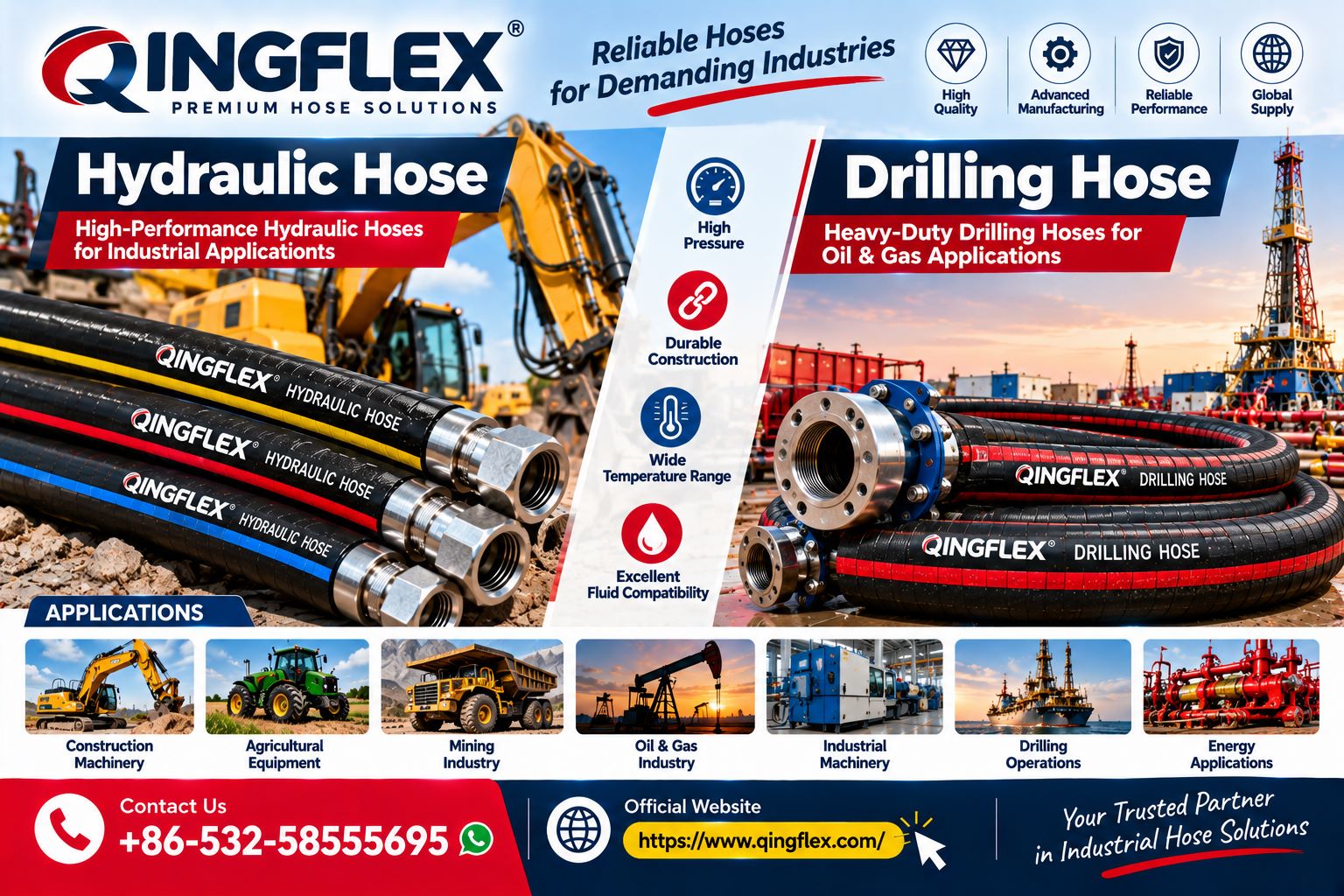
Industrial equipment reliability has become an important consideration for businesses operating in construction, manufacturing, mining, and energy production. A properly selected Hydraulic Hose supports pressurized fluid transfer in heavy machinery, while a specialized drilling hose plays an essential role in demanding drilling and oilfield applications.
As industrial operations involve increasing technical complexity, equipment manufacturers and procurement professionals are paying closer attention to hose construction, pressure ratings, material compatibility, and preventive maintenance.
Selecting the correct hose is not simply a purchasing decision. It is an important part of equipment performance, workplace safety, and long-term operational planning.
Why Hydraulic Hose Quality Matters in Modern Industries
Hydraulic systems use pressurized fluids to transmit power and control mechanical operations. These systems are essential for excavators, cranes, agricultural machinery, mining equipment, and industrial production lines.
A Hydraulic Hose is a flexible, reinforced conduit designed to transfer compatible hydraulic fluids between system components.
Unlike ordinary tubing, hydraulic hoses must withstand specified working pressures, mechanical movement, and environmental conditions.
Appropriate hose selection can help operators avoid preventable failures and maintain dependable machinery performance.
Understanding Hydraulic Hose Construction
Industrial hydraulic hoses typically consist of three functional layers designed to work together.
Inner Tube
The inner tube transports hydraulic fluid and must be compatible with the fluid’s chemical properties and operating temperature.
Reinforcement Layer
Steel-wire braiding, spiral-wire reinforcement, or textile materials help the hose withstand specified internal pressures.
Outer Cover
The protective outer layer helps resist abrasion, weather exposure, oil, and other environmental factors, depending on its material.
Hose construction varies according to the application. A high-pressure hydraulic system may require a different reinforcement configuration from equipment operating under lower pressures.
What Is a Drilling Hose?
A drilling hose is a specialized reinforced hose designed for transferring drilling fluids within suitable drilling and oilfield systems.
During drilling operations, drilling fluids circulate through designated equipment to assist with cuttings removal, cooling, and maintaining appropriate downhole conditions.
Depending on their design, drilling hoses may connect stationary and moving components of drilling fluid circulation systems.
Their construction must account for operating pressure, fluid characteristics, vibration, movement, and environmental exposure.
Specialized rotary and vibrator hoses may be used in demanding drilling applications, but the hose must be approved for the intended service.
Major Applications of Hydraulic and Drilling Hoses
Although both types support industrial fluid transfer, their applications differ significantly.
Construction and Heavy Machinery
Hydraulic hoses connect essential components in excavators, loaders, cranes, and other equipment requiring controlled hydraulic power.
Manufacturing and Automation
Industrial production machinery uses hydraulic systems for pressing, positioning, lifting, and automated operations.
Mining Equipment
Hydraulic systems support drilling machines, earthmoving equipment, and mineral extraction machinery.
Oil and Gas Drilling
A suitable drilling hose transfers specified drilling fluids within compatible rig circulation equipment.
Marine and Offshore Equipment
Specialized hoses may be required for hydraulic power systems and drilling operations exposed to challenging marine environments.
Each application requires careful evaluation of the complete hose assembly.
Hydraulic Hose vs Drilling Hose: Understanding the Differences
| Feature | Hydraulic Hose | Drilling Hose |
| Primary function | Transfers hydraulic power fluids | Transfers drilling fluids |
| Common applications | Machinery and industrial equipment | Drilling rigs and oilfield systems |
| Fluid type | Compatible hydraulic fluids | Drilling mud and specified fluids |
| Design priorities | Pressure, flexibility, fluid compatibility | Pressure, movement, abrasion, fluid compatibility |
| Common challenges | Pressure surges, bending, external wear | Vibration, mechanical movement, fluid abrasion |
A similar appearance does not indicate that the two products are interchangeable.
Key Factors That Influence Industrial Hose Performance
Working Pressure
The selected hose assembly must be suitable for expected working pressure and applicable system conditions.
Temperature Resistance
Operating temperatures can affect hose materials. Both fluid temperature and surrounding environmental conditions must be considered.
Flexibility
Improper bending or twisting can damage hose assemblies. Installation should respect the specified minimum bend radius.
Abrasion Resistance
Contact with rough surfaces and moving equipment can deteriorate hose covers. Protective measures may be necessary in certain installations.
Connection Compatibility
End fittings and couplings must be suitable for the complete assembly, not just the hose itself.
Common Causes of Industrial Hose Failure
Hose failures often result from multiple operating or installation factors.
Common causes include:
- Excessive operating pressure or unexpected pressure spikes.
- Incorrect hose routing or repeated twisting.
- Exposure to temperatures outside specified limits.
- Abrasion from nearby machinery or sharp surfaces.
- Incompatible fluids or unsuitable inner tube materials.
- Damaged or incorrectly assembled fittings.
- Failure to replace deteriorated hose assemblies.
High-pressure leaks can cause serious injection injuries. Equipment must be safely isolated and depressurized before maintenance.
Operators should never attempt to locate a pressurized leak with their hands.
How Preventive Maintenance Supports Equipment Reliability
Routine inspection can identify visible damage before it develops into a more serious problem.
Maintenance personnel should examine hoses for cracks, abnormal swelling, exposed reinforcement, leakage, and damaged couplings.
Inspection schedules should reflect equipment use, operating conditions, and manufacturer recommendations.
For drilling equipment, technicians should also monitor conditions associated with vibration, repeated movement, and abrasive drilling fluids.
Damaged assemblies should be removed from service in accordance with established procedures.
Choosing the Right Industrial Hose Supplier
Industrial buyers should evaluate product quality and technical suitability before purchasing.
Important considerations include:
- Clearly documented working-pressure ratings.
- Appropriate hose materials and reinforcement.
- Fluid and temperature compatibility.
- Relevant technical standards and testing information.
- Compatible fittings and assembly specifications.
- Available product dimensions and customization options.
- Transparent order requirements and technical communication.
Manufacturers should provide sufficient information for customers to assess suitability for their intended applications.
Frequently Asked Questions (FAQs)
1. What is a Hydraulic Hose?
A hydraulic hose is a reinforced flexible tube designed to transfer compatible hydraulic fluids between components of a hydraulic system.
2. What is a drilling hose used for?
A drilling hose transfers specified drilling fluids within compatible equipment used in drilling and oilfield operations.
3. What materials are commonly used in hydraulic hoses?
Common constructions include synthetic rubber inner tubes, textile or steel reinforcement, and protective rubber covers.
4. What is the difference between hydraulic and drilling hoses?
Hydraulic hoses primarily serve fluid-power systems, while drilling hoses are designed for specified drilling fluid circulation applications.
5. Can a hydraulic hose be used for drilling operations?
Only when its complete assembly is specifically rated and suitable for the intended drilling application.
6. Why is pressure rating important?
Pressure ratings establish the specified operating limits of hoses and assemblies under defined conditions.
7. What causes premature hose damage?
Common causes include abrasion, overheating, incorrect installation, incompatible fluids, pressure overload, and fitting problems.
8. How often should industrial hoses be inspected?
Inspection frequency depends on operating conditions, manufacturer guidance, equipment requirements, and applicable safety procedures.
9. Are drilling hoses suitable for offshore applications?
Certain specialized drilling hoses are designed for offshore use, provided they meet the relevant equipment and environmental requirements.
10. What should buyers consider before ordering industrial hoses?
Buyers should verify pressure requirements, hose dimensions, materials, fluid compatibility, fitting specifications, and relevant quality documentation.
Media Contact
Industry: Hydraulic Hoses, Drilling Equipment & Industrial Fluid-Transfer Solutions
Product Enquiries: Hydraulic Hoses, Drilling Hoses & Reinforced Hose Assemblies
Contact Number: +86-532-58555695
Email: info@qingflex.com
Official Website: https://www.qingflex.com/