Modern bags are expected to do much more than simply carry personal belongings. Professionals, travelers, outdoor enthusiasts, students, military personnel, photographers, and corporate teams increasingly look for bags that combine durability, organization, comfort, security, and personal identity. This growing demand has made the tactical bag and custom backpack popular choices across different industries and everyday lifestyles.
A tactical bag focuses primarily on rugged construction, intelligent compartment design, accessibility, and demanding usage conditions. A custom backpack, meanwhile, gives businesses and individuals greater control over materials, colors, compartments, branding, size, and functional features.
Understanding their construction, benefits, applications, and customization possibilities can help buyers select a bag that delivers long-term value instead of choosing purely on appearance.
What Is a Tactical Bag?
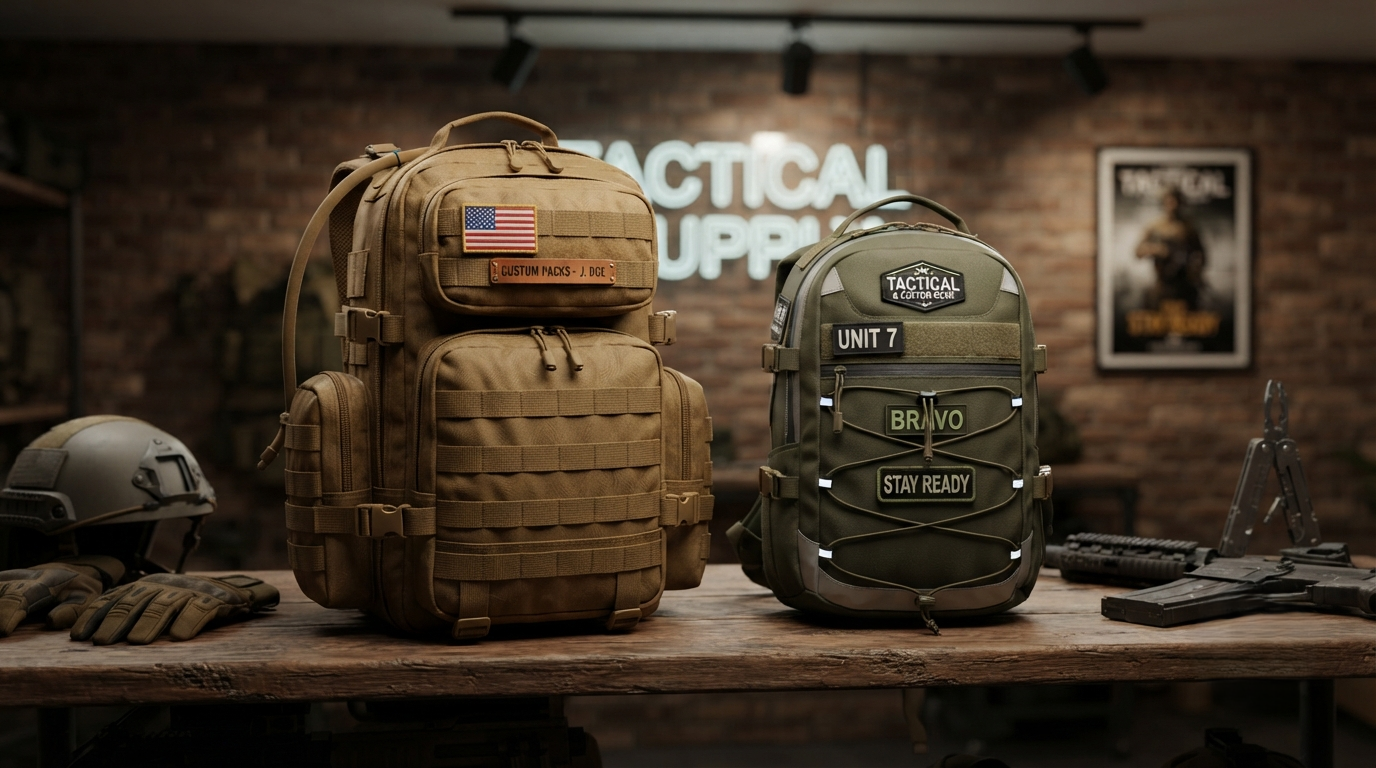
A tactical bag is a heavy-duty carrying solution originally influenced by military, law-enforcement, emergency-response, and outdoor equipment. Modern tactical designs have expanded far beyond professional field use and are now widely used for travel, commuting, hiking, photography, camping, and equipment organization.
Typical tactical bags emphasize:
- Durable and abrasion-resistant fabrics
- Multiple organized compartments
- Reinforced stitching at stress points
- Adjustable shoulder and chest straps
- Quick-access pockets
- Weather-resistant construction
- Modular attachment areas
- Strong zippers and hardware
- Padded equipment protection
Rather than offering one large storage area, tactical designs usually divide available space into functional sections. This makes frequently used equipment easier to identify and access.
Practical Organization Matters
One major advantage of tactical-style storage is compartment planning. Users may separate electronics, clothing, documents, tools, water bottles, accessories, or emergency supplies instead of mixing everything in one central compartment.
Well-designed internal organization can improve both convenience and equipment protection.
What Is a Custom Backpack?
A custom backpack is manufactured or modified according to specific functional, visual, or branding requirements. Customization may range from printing a company logo on an existing design to developing an entirely original backpack structure.
Businesses frequently order customized backpacks for employee kits, promotional campaigns, schools, sports organizations, events, travel companies, retailers, and private-label product collections.
Customization options may include:
- Backpack dimensions
- Fabric selection
- Logo printing or embroidery
- Color combinations
- Zipper specifications
- Number of compartments
- Laptop sleeves
- Bottle pockets
- Shoulder strap construction
- Packaging and labeling
A thoughtfully designed custom backpack turns a general carrying product into something created for a clearly defined user group.
Tactical Bag vs Custom Backpack
Although these categories sometimes overlap, their primary objectives can be different.
| Feature | Tactical Bag | Custom Backpack |
| Main Focus | Durability and utility | Personalization and purpose |
| Compartments | Usually extensive | Designed according to requirement |
| Appearance | Rugged and functional | Flexible brand-specific styling |
| Materials | Heavy-duty fabrics common | Wide material selection |
| Branding | Usually secondary | Often a major priority |
| Applications | Outdoor, field, travel, equipment | Corporate, retail, school, travel, promotional |
A manufacturer can also combine both concepts by producing a customized tactical backpack with specialized compartments, branded details, and rugged materials.
Important Materials Used in Durable Backpacks
Material selection directly affects weight, durability, appearance, moisture resistance, production cost, and expected lifespan.
Polyester
Polyester is widely used because it offers practical durability, economical production, color versatility, and relatively easy maintenance. Different fabric densities can be selected depending on the intended application.
Nylon
Nylon is valued for strength and abrasion resistance. It is frequently chosen for performance-oriented backpacks where durability and reduced weight are important considerations.
Coated Fabrics
PU or similar coatings can improve resistance against light rain and moisture. However, actual water protection depends on the entire construction, including seams, zippers, openings, and coatings.
Reinforced Components
Quality manufacturing also involves reinforcing handles, shoulder straps, corners, zipper areas, and other high-stress sections. Strong fabric alone cannot compensate for weak stitching or poorly constructed load-bearing points.
Essential Features of a High-Quality Tactical Bag
Choosing a tactical bag should involve more than checking its appearance.
Look for practical characteristics such as:
- Reinforced carrying handles
- Comfortable padded shoulder straps
- Adjustable compression straps
- Breathable back padding
- Separate equipment compartments
- Strong zipper systems
- Easy-access external pockets
- Secure internal storage
- Appropriate load distribution
- Durable buckles and attachment points
The right combination depends on how the bag will actually be used. A daily commuter may prioritize a laptop compartment, while an outdoor user may need additional attachment points and hydration-compatible storage.
Why Businesses Invest in Custom Backpacks
A custom backpack can provide more lasting brand exposure than many traditional promotional products. Unlike disposable marketing materials, a practical backpack may remain in regular use for months or years.
Businesses use customized backpacks for:
- Corporate gifting
- Employee onboarding
- Product promotions
- School merchandise
- Sports teams
- Events and conferences
- Retail collections
- Travel accessories
- Brand merchandise
- Private-label businesses
When functionality is strong, the backpack becomes both a practical product and a mobile branding opportunity.
How to Plan a Custom Backpack Project
Successful customization begins with identifying the intended user.
Before production, determine:
- Who will use the backpack?
- What will they carry?
- How much capacity is required?
- Will electronics need padding?
- What environment will the bag be used in?
- What branding technique is appropriate?
- What durability level is required?
- What target price range is practical?
These decisions help prevent unnecessary features and improve production efficiency.
Logo Application Options
Common branding methods include embroidery, screen printing, heat-transfer printing, woven labels, rubber patches, and printed panels.
Each method creates a different visual effect. Embroidery can offer a professional textured appearance, while printed graphics may support more detailed artwork and multiple colors.
Comfort and Ergonomics Should Not Be Ignored
Even a durable backpack becomes inconvenient when weight distribution is poor.
Shoulder straps should provide adequate width and cushioning. Back panels can include breathable padding to reduce discomfort during extended wear. Larger bags may benefit from chest or waist support depending on their intended load.
Ergonomic design becomes especially important when users regularly carry laptops, equipment, tools, or travel essentials.
Choosing the Right Capacity
Backpack capacity should match real requirements rather than simply choosing the largest available option.
Smaller backpacks are practical for commuting and short daily use. Medium-sized designs can accommodate work equipment, clothing, and travel essentials. Larger tactical designs may be appropriate for outdoor trips or applications involving substantial equipment.
Oversized bags can encourage unnecessary loading, while undersized bags may create overcrowding and excessive pressure on zippers and seams.
Quality Checks Before Buying or Manufacturing
Before selecting a supplier or approving bulk production, inspect important quality details.
Check:
- Stitch consistency
- Zipper movement
- Strap reinforcement
- Fabric thickness
- Buckle quality
- Internal lining
- Logo positioning
- Pocket alignment
- Padding thickness
- Finished dimensions
For a large custom backpack order, reviewing a production sample before mass manufacturing can help identify design or quality issues early.
Frequently Asked Questions
1. What is a tactical bag commonly used for?
A tactical bag can be used for outdoor activities, travel, commuting, emergency equipment, photography gear, tools, and organized everyday carrying.
2. Can tactical bags be customized?
Yes. Manufacturers can customize colors, logos, compartments, materials, labels, straps, and other design elements depending on production capabilities.
3. What makes a custom backpack different from a standard backpack?
A custom backpack is produced or modified according to specific branding, structural, color, material, or functional requirements.
4. Which material is best for tactical backpacks?
There is no universal best material. Nylon and polyester are common choices, with the ideal fabric depending on durability, weight, weather exposure, and budget requirements.
5. Can a custom backpack include a laptop compartment?
Yes. Padded laptop sleeves can be integrated according to intended laptop dimensions and protection requirements.
6. Are tactical bags waterproof?
Some are water-resistant, while others may offer stronger weather protection. Buyers should verify the fabric, coating, zipper construction, and manufacturer’s stated performance.
7. Which logo method is suitable for backpacks?
Embroidery, screen printing, heat transfer, woven labels, and rubber patches are common options. The best technique depends on fabric type and branding design.
8. How do I select backpack capacity?
Consider what users normally carry, how long they will use the bag, and whether bulky equipment or electronics require dedicated space.
9. Why are reinforced stitches important?
Handles and shoulder straps experience substantial stress. Reinforced stitching helps reduce premature tearing at these load-bearing areas.
10. Can businesses manufacture backpacks under their own brand?
Yes. Many manufacturers support OEM or private-label production, including custom logos, labels, packaging, materials, and product specifications.